Denisovan Ancestry in East Eurasian and Native American Populations

11 August 2014

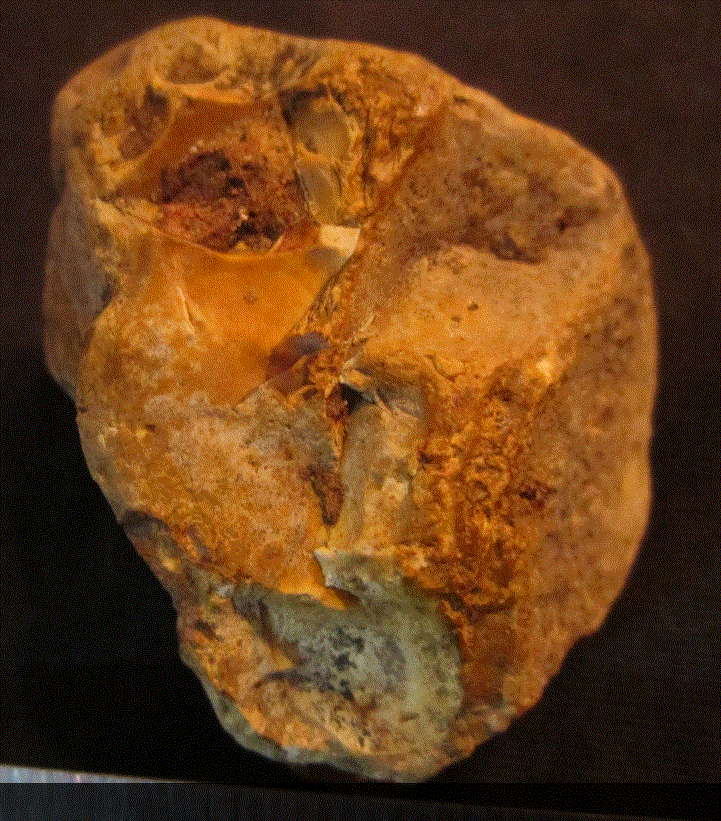
Bird figure backs as lithic workbenches

Water bird figure facing left with tool bit protruding from back

Ken Johnston find, Licking County, Ohio.
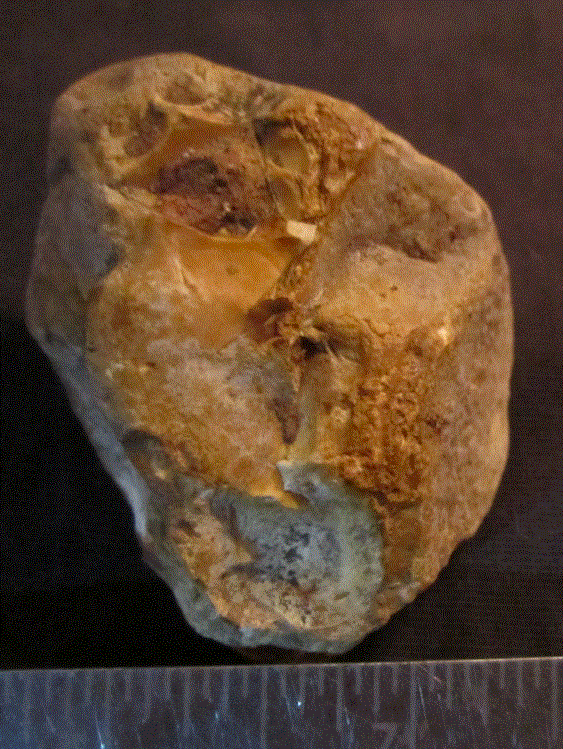
This is the reverse side with bird figure facing right now.

These two artifacts were found together at Flint Ridge and I have interpreted them as bird figures whose backs were used as small lithic workbenches perhaps similarly to examples originally described by Jan van Es of Roermond, The Netherlands. 

Both of these birds' backs is carrying a load of quartz crystals which have been worn down by grinding wear. One of the figures presents a cradling cup-like concave surface which has been smoothed from use and the other presents a convex quartz crystal formation with a protruding wear bit. Both figures have unusually flat bases which are stable under movement and pressure. They were found together at an ancient chert quarry and workshop site at Flint Ridge, Glenford, Ohio, and are essentially the same size.

Ken Johnston find, Licking County, Ohio. Interpreted as a bird with well defined wing facing right and another creature with an eye, perhaps a bird, facing left.

The dip seen on the back of the bird here is a cluster of quartz crystals which has been worn down

The two Licking County, Ohio, artifacts with scale


03 August 2014

A multi-colored flint and quartz crystal lion head figure stone

Lion head figure stone
Ken Johnston find, Flint Ridge, Licking County, Ohio. 8cm wide.

An illustration indicating the interpreted feline head and neck form. A large cluster of quartz crystals serves as the eye of the lion head figure.

02 August 2014

Angular nature of some stone material forces Cubism-like constraints on prehistoric artists as well as modern-day interpreters

Ken Johnston find, Flint Ridge, Licking County, Ohio. Interpreted as a left human facial profile.

Moving viewing perspective to the left to see a "straight-on" view of the face. An interpreted tongue for this perspective has been highlighted in red. The eye circled at left in the photo above is composed of an excavation of stone to create a bas relief triangular eye in its socket.

There are two ground nostril divots in the quartz crystals which I have circled in the photo above. The stone material does not allow addition of the nostrils in the representative position for a nose profile as illustrated in the drawing at left. With the nostrils skewed to the right of the nose profile image, they also work as the viewing perspective on the sculpture moves to the right. 

This Vanport chert sculpture stands upright on a flat base in correct orientation to present this human facial profile. Eyes, nose, mouth, chin, forehead and ear embellished on a serendipitous natural form probably encountered in tool-stone procurement activities at Flint Ridge.

Side 2 with scale

Three perspectives on this sculpture. (Click photo to expand.) The highly angular nature of the chert material here requires a change of interpretive visual attention from our contemporary sensibilities. Rather than looking for accurate representation, we must use an almost "low resolution" focus to allow us to see the possible larger forms which may seen when the excruciating details of the rock are ignored. For me, this often requires taking one or several steps back from an artifact or a photo, and maybe squinting my eyelids a bit to appreciate the forest despite the trees (and branches and roots!)

31 July 2014

A black bird sculpture centered on a white bivalve shell fossil with a human face as if the shell was a "blooming hairdo"

Find by Ken Johnston at a Flint Ridge quarry and workshop location, Licking County, Ohio. 8.5cm length.

A black bird sculpture centered on a white bivalve shell fossil. The bird's beak is at far left, tail at far right. The fossil shell was probably identified on a larger stone and then it was reduced as the bird form was sculpted to feature the shell. Perhaps "doing justice" to the fossil meant giving it to a bird form and adding a human face depiction. Flint Ridge has produced many bird figures already seen on this blog. This is a classic simple bird profile sculpture.

Image of the West Tofts, U.K,,  handaxe, ca. 100,000 BP, centered on a bivalve fossil

This picture has been cut from the photo at top of the Licking County, Ohio, bird sculpture artifact. This open-mouthed face image with a blooming shell "hairdo" is particularly interesting given the comment of Jan Evert Musch regarding the details of the West Tofts handaxe at the link above and its possible inclusion of human imagery related to the shell.

27 July 2014

Austin, Texas, area "One eye open, other eye shut or missing" motif on a chert pebble and in a repeated local pattern

David Boies artifact find, near Austin, Texas

This figure evidences stone removal on the "right eye, the nose" and the "mouth" made to affect the final desired image of a chert pebble face mask expressing the pervasive portable rock art motif of "One eye open, other eye shut or missing." 

This motif dates to the Acheulean and may also be seen in Middle-Paleolithic European assemblages, according to art and religion scholar James Harrod, Ph.D., at OriginsNet.

View 2 of this worked pebble with scale in inches.

The face looking at us straight-on has the left profile of another face occupying its left side. The two faces share the same stone feature as a "nostril."

I am inspired by the rock art scholarship of Barbara Olins Alpert who has made superb comparisons of Pleistocene art forms and historic to modern arts. The kind of facial image ambiguity seen in the Texas figure stone is also exploited by artist Pablo Picasso of our time.

“There Is Nothing New Under The Sun.” Ecclesiastes 1:4-11

Author Barbara Olins Alpert describes a simplistic face made by addition of three painted black lines to a naturally-suggestive form in a cave at Vilhouueur (Charente, France) seen pictured here and dated to ca. 25,000 years before present. See her illustration below.


David Boies Austin, Texas finds, side by side and compared to France cave rock art painting.

25 July 2014

Austin, Texas, area human head sculpture has a mammoth figure cresting its head in Paleolithic art tradition

Human head sculpture, find by David Boies, near Austin, Texas. There may be red ocher staining on the lower part of this artifact.

Ken Johnston illustration marking the full mammoth in profile facing left which is depicted as "cresting" the human's head.

Licking County, Ohio, human face left profile sculpture interpreted as also incorporating a mammoth icon (trunk and head bump) cresting its head. Found in context of other human/mammoth art pieces. Featured in an earlier posting.

24 July 2014

Sahuarita, Arizona, stone human head sculpture incorporates visage of a "one-eyed feline," a recurring motif in portable rock art

Sahuarita, Arizona, find by James, identified as a human head sculpture

James writes, "I have been hunting arrowheads and various artifacts for about 8 years and one day out I found a carving and couldn't wait to get home and share what I found. I posted pics on the site I joined and then every one said I was crazy, it was just a rock. But the art/tool was really as plain as the nose on your face, so I started looking for research and here I am still wanting to share. I have found more arrowheads just by following the art that is laying on the ground. I need a community that knows what is really going on. Not just another sharp rock site- there is a lot more going on than people realize. And I would like to share these images from Sahuarita, AZ . Thanks, love the site. James"


Ken Johnston detected the visage of a one-eyed feline incorporated into the backside of the human head sculpture identified by James. This helps "seal the deal" on the authenticity of this art piece. The human head form and the one-eyed feline form are consistent with other portable rock art representations as seen on this blog.

The missing eye is represented by a gash, where the seeing eye has more stone detail.

"Most people who care much about art find that of the work that moves them most the greater part is what scholars call "Primitive" ...In primitive art you will find no accurate representation; you will find only significant form. Yet no other art moves us so profoundly." -Clive Bell, 1914; quoted after Cahn and Meskin 2007: 266.

Sculpture from Italy on the cover of Pietro Gaietto's book compared to Arizona example

22 July 2014

David Boies iconic finds at Austin, Texas, illustrate how disturbance of natural quartz crystal fractal patterns through grinding and chipping may allow scientific confirmation of artificiality

David Boies iconic finds at Austin, Texas, illustrate how human disturbance of natural quartz crystal fractal patterns through grinding and chipping may allow scientific confirmation of artificiality of suspected artifacts such as these

Mr. Boies has identified dozens of portable rock art objects in a concentrated area near Austin, Texas.


21 July 2014

Missouri human head sculpture identified by Keith Stamper is similar to Acheulean tradition sculpture described by author Pietro Gaietto

Keith Stamper find, St. Peters, Missouri, identified as a sculpted human head figure 

The Keith Stamper sculpted head at top has strong stylistic similarity to this sculpted human head by Homo erectus from the Lower Paleolithic Acheulean tradition featured by Pietro Gaietto on the cover of his book.

(left) View 2 of the Keith Stamper Missouri sculpture find, (right) a profile view showing "nose" protrusion

Two human heads with facial profiles facing left (click photos to expand)

A sample of the dozens of anthropomorphic forms identified by Keith Stamper at St. Peters, Missouri

Levallois-like flake tool identified among sculptures by Keith Stamper

Thick blade tool found among sculptures by Keith Stamper